-
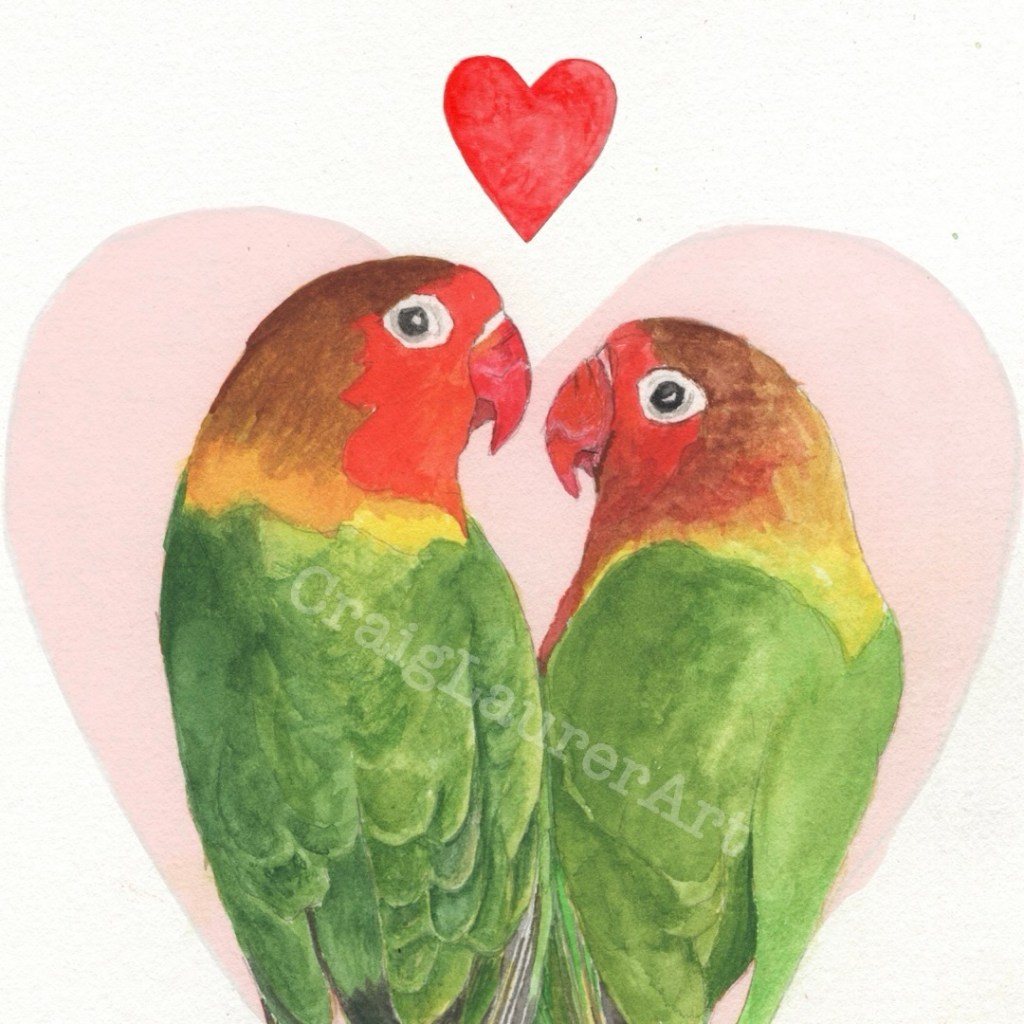
I have a new watercolor, The Lovebirds, and I’ve made it into notecards (barely) in time for Valentine’s Day. My original watercolor of two lovebirds is based on a couple of reference images I found online. The heart and the pink background are both from a separate watercolor heart I created for another work. I…
-
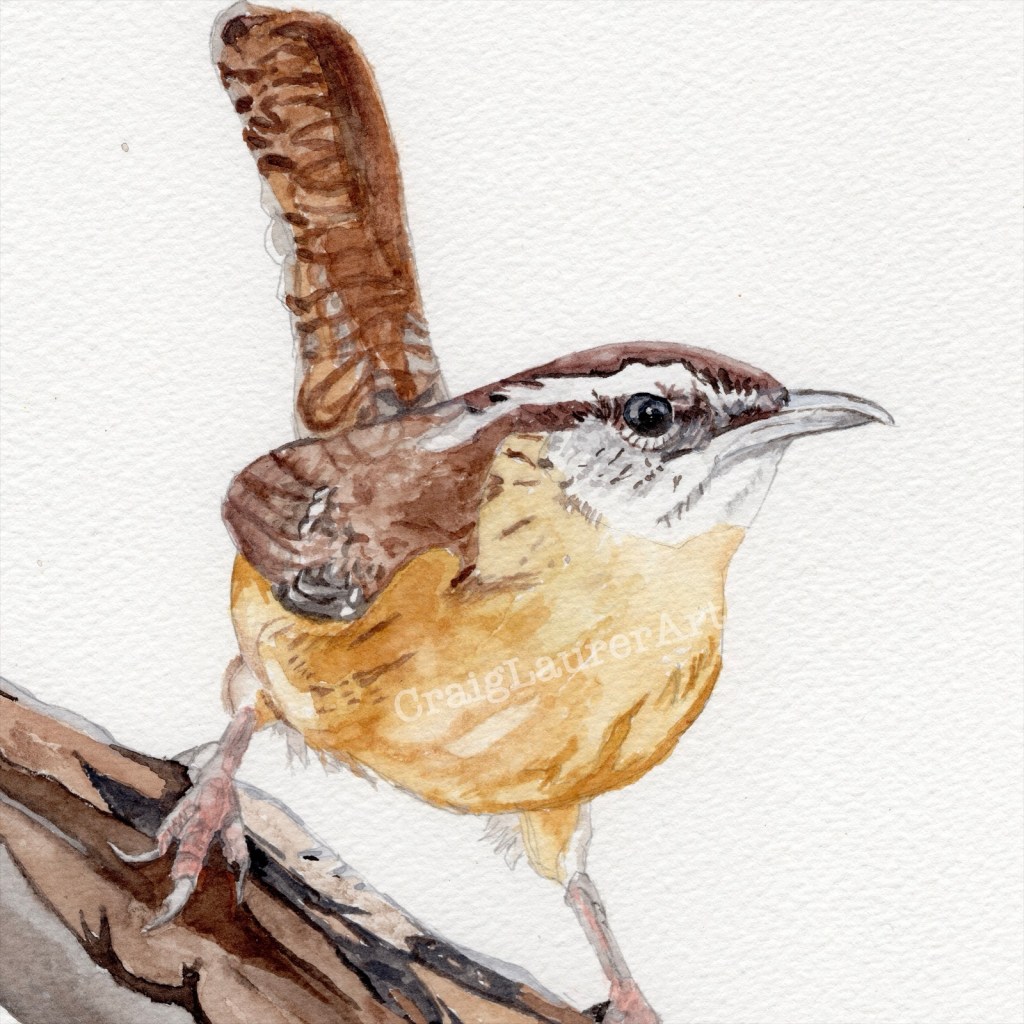
Who doesn’t love a Carolina Wren? I love to watch these little characters when they visit my feeders. They especially like to climb inside the bluebird feeder to chow down on dried mealworms. They will grab the mealworms off the platform feeder, too, if there are any left! This isn’t my first attempt at a…
-
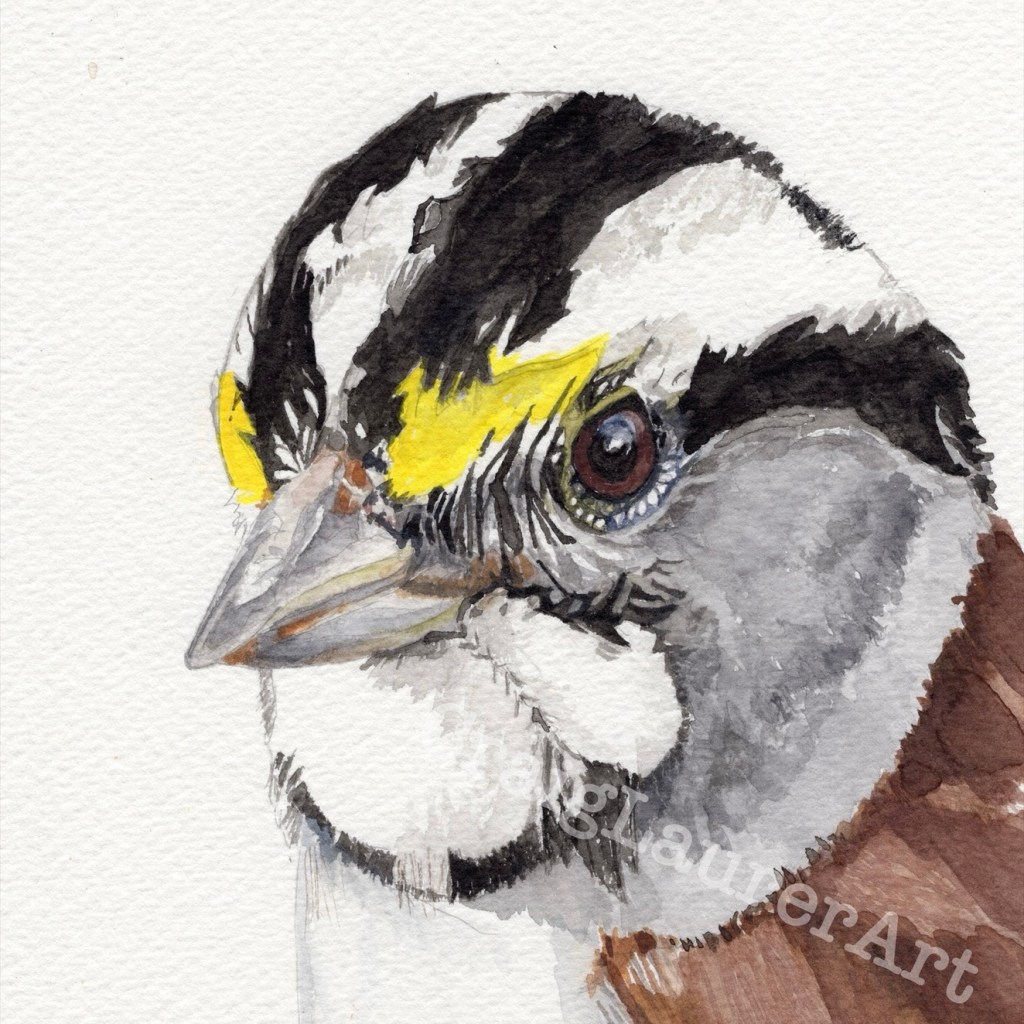
The white-throated sparrow is another of my favorites. These are distinctive because of their bright white bib, outlined in black, and of course the flashes of yellow on either side of the black crown stripe. You can easily attract them to backyard feeders but they’ll often be seen on the ground foraging among the fallen…
-
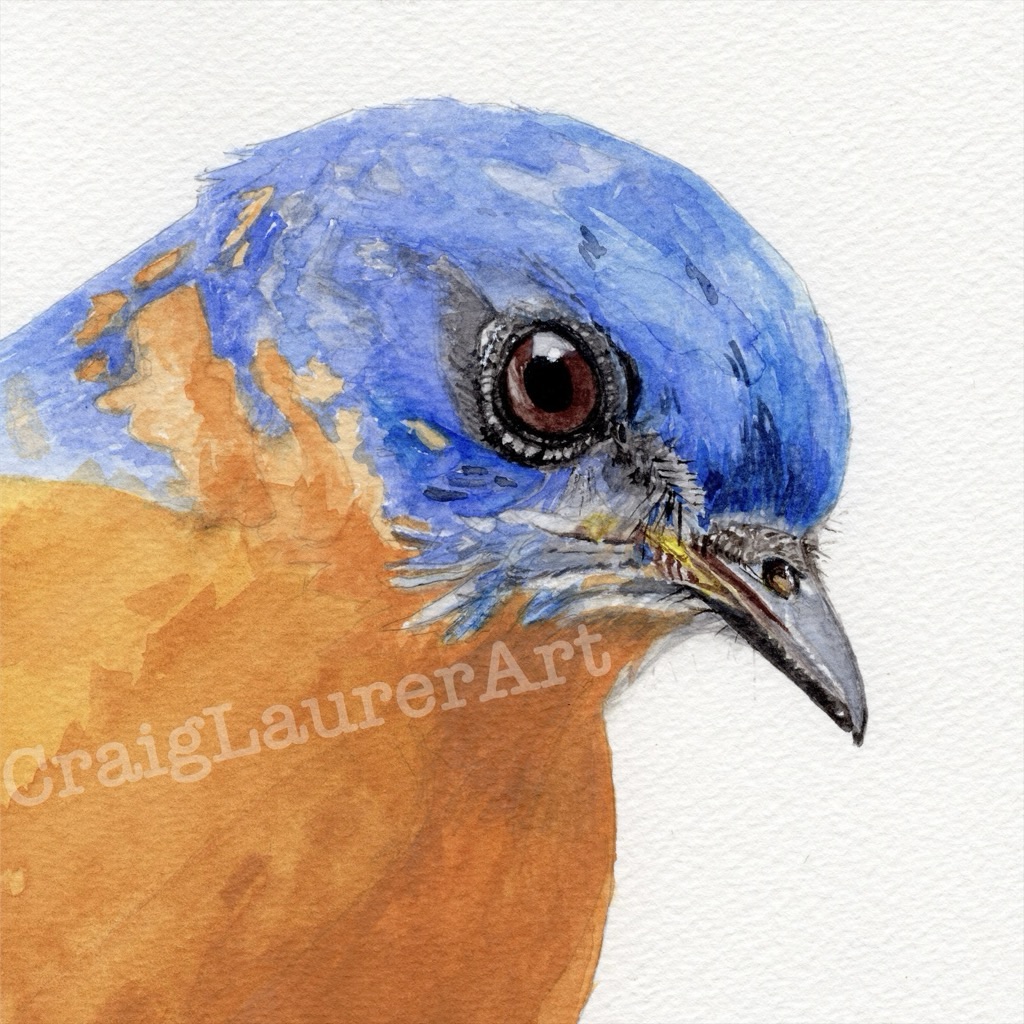
OK I did another bird portrait. I thought I was done with this series for now, but I’ve decided to make a calendar, so I need 12, obviously. Number 10 is the Eastern Bluebird, a year-round resident in all areas of NC. You can attract them to your yard with dried mealworms on a platform…
-
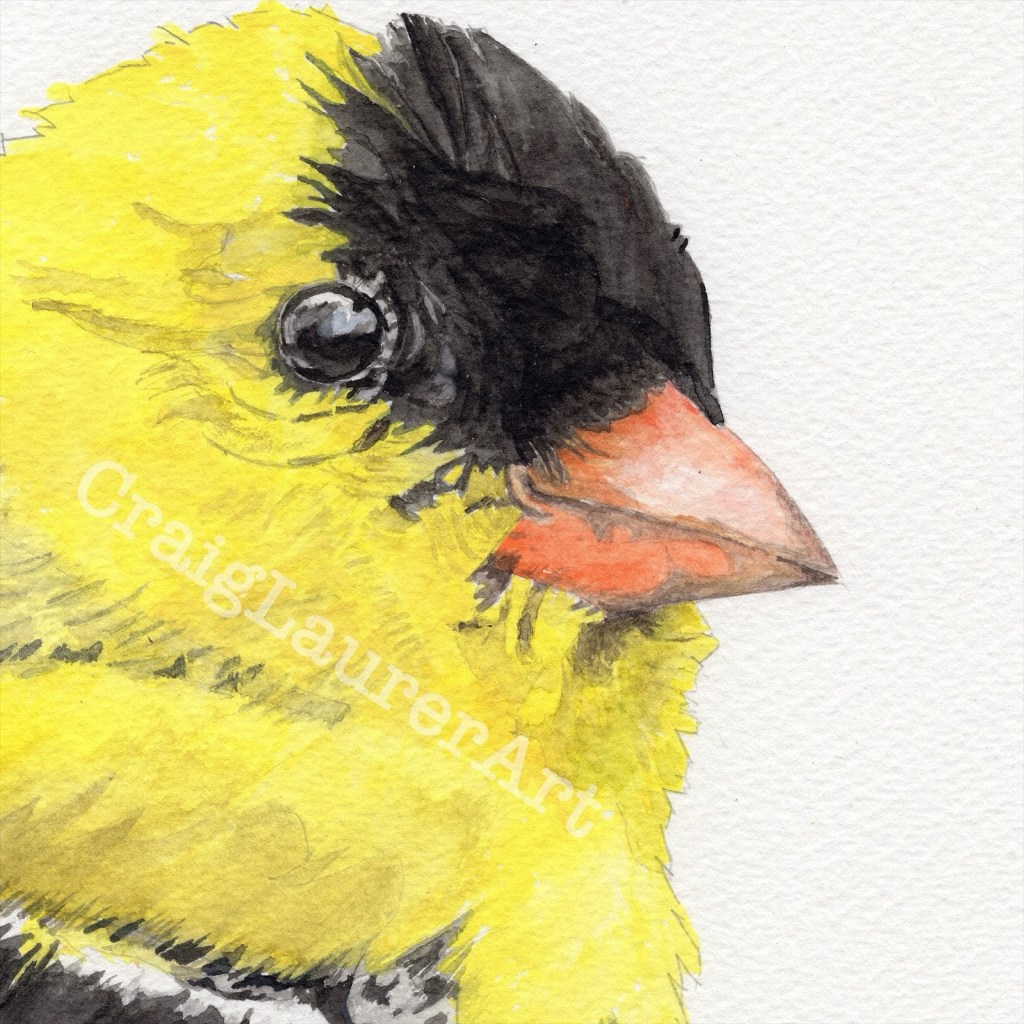
Number 9, and probably last for a while, in my Bird Portraits series is the American Goldfinch. The striking yellow and black finch maintains the beauty of his bright yellow plumage by molting in the spring. Other birds molt only in the fall, only the Goldfinch refreshes his feathers twice a year. My original watercolor…
-

I haven’t painted a bird with coffee, or any animal with coffee, since I did “Joe Squirrel” a while back – almost two years ago, actually. I just finished this new one last week. I’m calling him “Joe Crow.” though he could be a raven, I think he’s just an American Crow. Like any good…
-
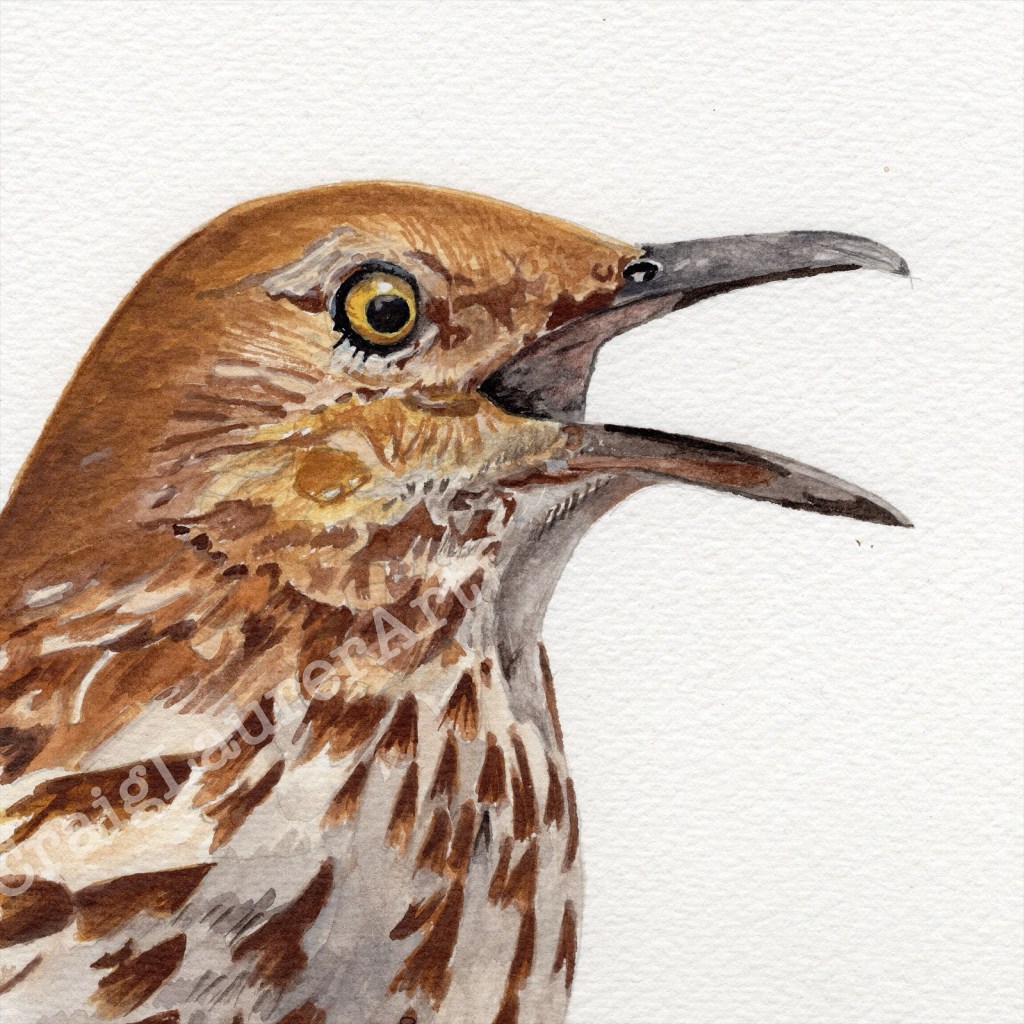
Number 8 in my series of bird “portraits” is the brown thrasher. A commenter suggested this would be a good one and they were right! Very happy with how this one came out. The brown thrasher is a fun bird to watch. They move quickly on the ground looking for insects. You’ll see that the…
-

The big thrush is my 7th bird portrait. (There may be one more in this series, coming soon). The American Robin is considered by many to be a sign of spring, but the truth is they’re year-round in almost all of the US. (One of the few exceptions being the area where I was born).…
-

One of the Triangle area’s cutest birds is number 6 in my portrait series: the Carolina chickadee. These little guys eat insects and spiders but also fruit and seeds, so they are easily attracted to backyard bird feeders. They are fun to watch. You can tell Carolina chickadees from black-capped chickadees easily: if you see…
-
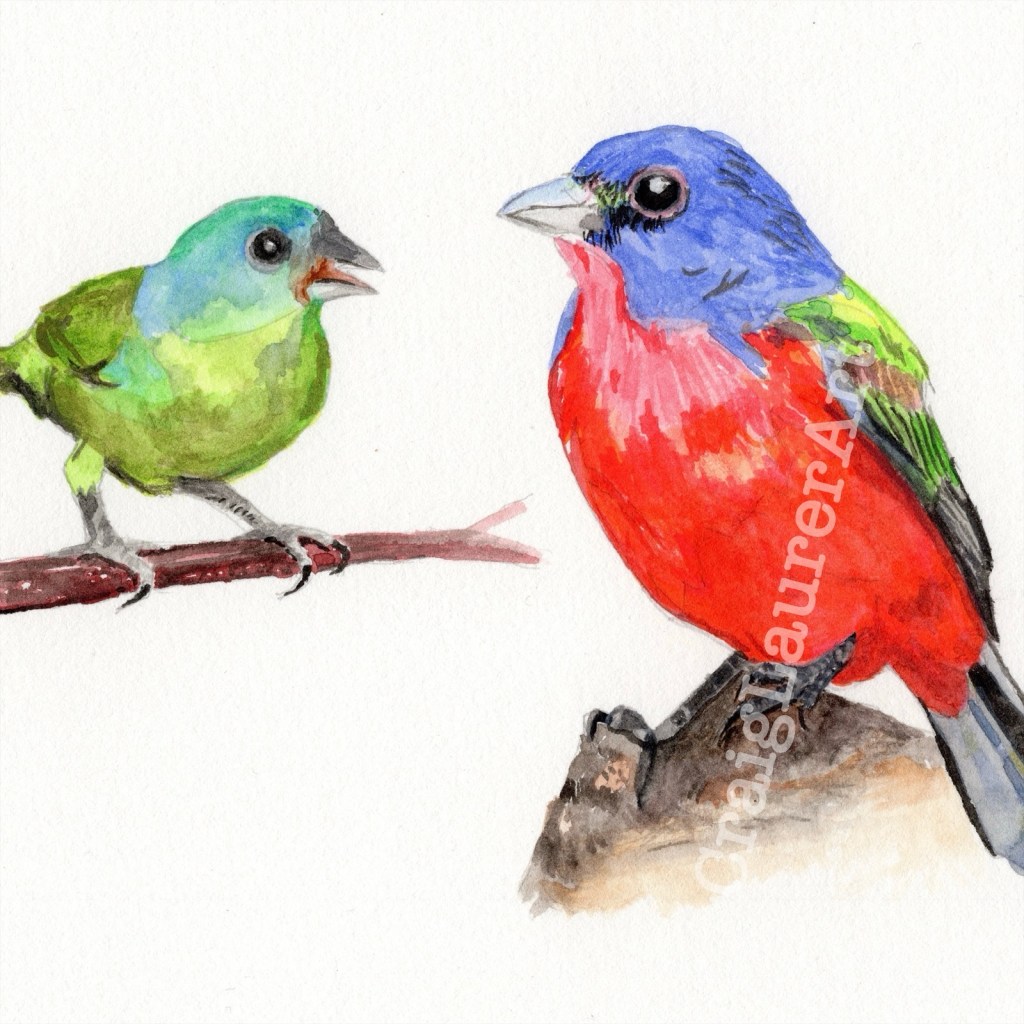
The News&Observer published this story today: https://www.newsobserver.com/news/local/article311339780.html A male painted bunting seen in Dix Park has created a furor among local birders. I’m going to try to get there this weekend. Meanwhile you can see my watercolor painting of a painted bunting male and female pair in an earlier post on this site. Happy Friday,…
 Craig Laurer